History of Parc Royal Hotel in Cuenca
Our history
Tradition has it that one of Bolívar's generals lived on this corner. In the 1920s, his descendants built the current building here, which from 1926 housed the finest hotel in Cuenca at the time. Decades later came a family of jewelers who still care for it, and today, nearly a century later, it welcomes travelers once again.
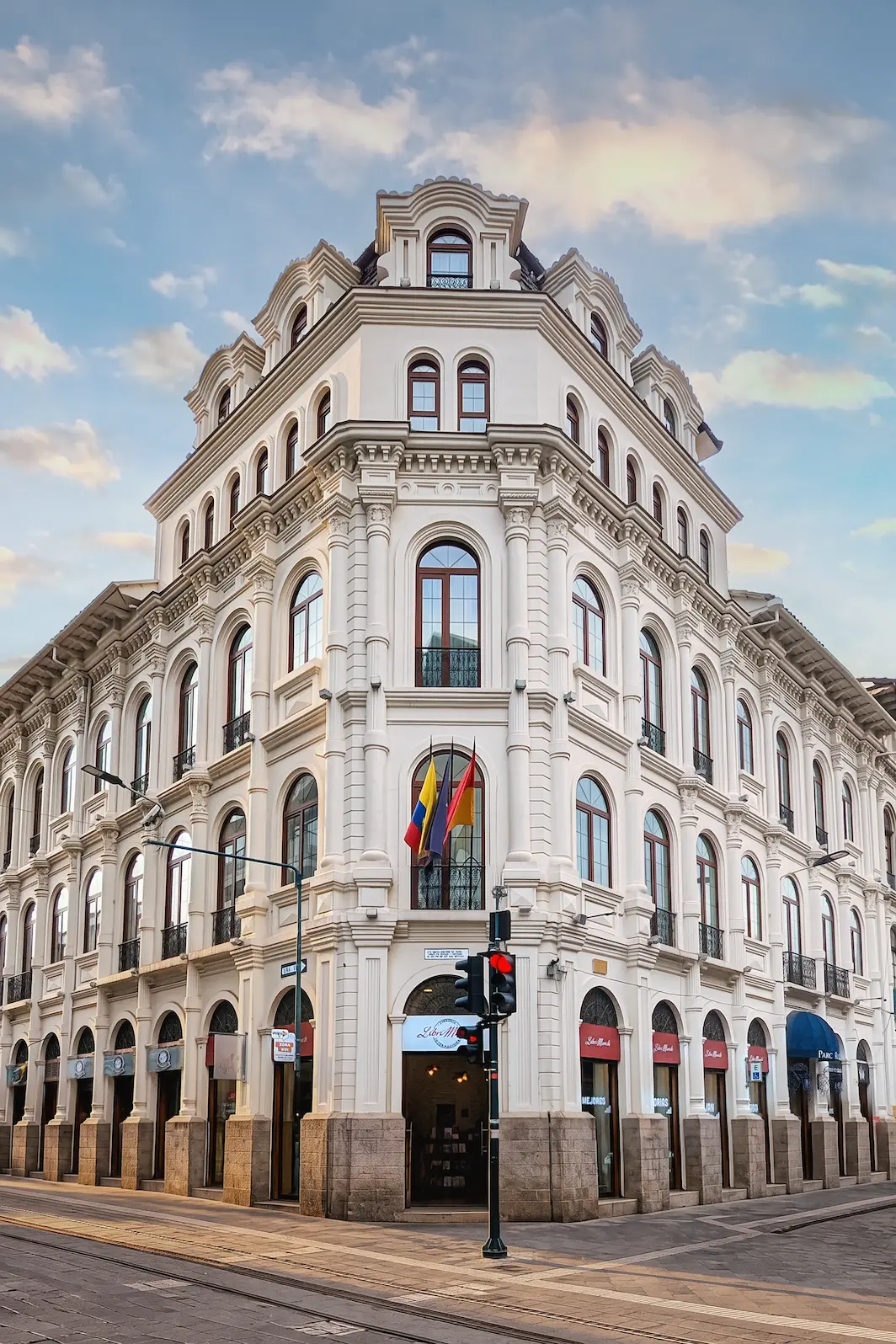
The corner
Chapter 1 · 19th century
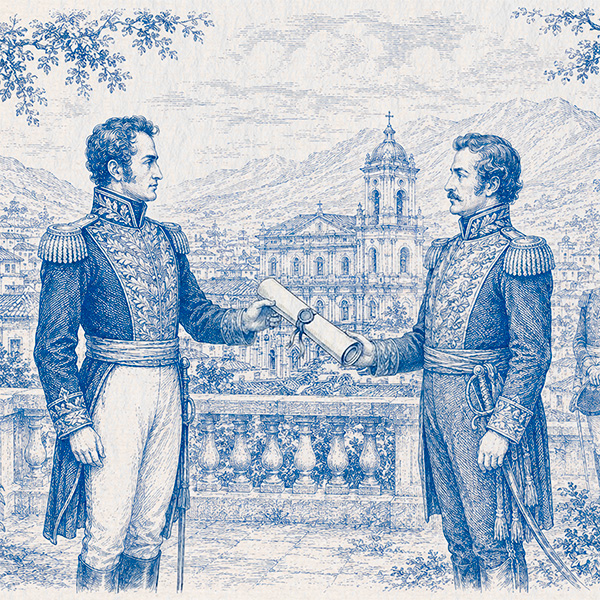
It is said that Simón Bolívar granted properties in Cuenca to General Ignacio Torres Tenorio.
Cuenca was founded in 1557 on a grid of straight streets laid out around the Plaza de Armas, today Calderón Park. That layout has been preserved almost intact and is one of the reasons UNESCO declared the historic center a World Cultural Heritage Site in 1999. Parc Royal is part of it, 200 meters from the old square.
It is said that Simón Bolívar granted properties in Cuenca to General Ignacio Torres Tenorio.
Tradition places the home of General Ignacio Torres Tenorio at this corner. Born in Popayán in 1776, he fought for independence starting in 1809 and served as an aide-de-camp to Simón Bolívar—the Liberator who led the independence movements of Venezuela, Colombia, Ecuador, Peru, and Bolivia. After the Battle of Pichincha in 1822, Bolívar appointed him governor of Cuenca and, as the story goes, granted him properties in the city, including this plot of land. Today, the corner joins two streets whose names come from that history: Gran Colombia, which recalls the republic founded by Bolívar, and Luis Cordero, which honors the 19th-century poet and president of Ecuador.
Torres remained in Cuenca. Here, he raised his family, introduced the city's first printing press, and represented Azuay, the province of Cuenca, as both a deputy and a senator.
He died in 1840, and a plaque on the adjacent façade—facing Luis Cordero Street—commemorates the centenary of his death.
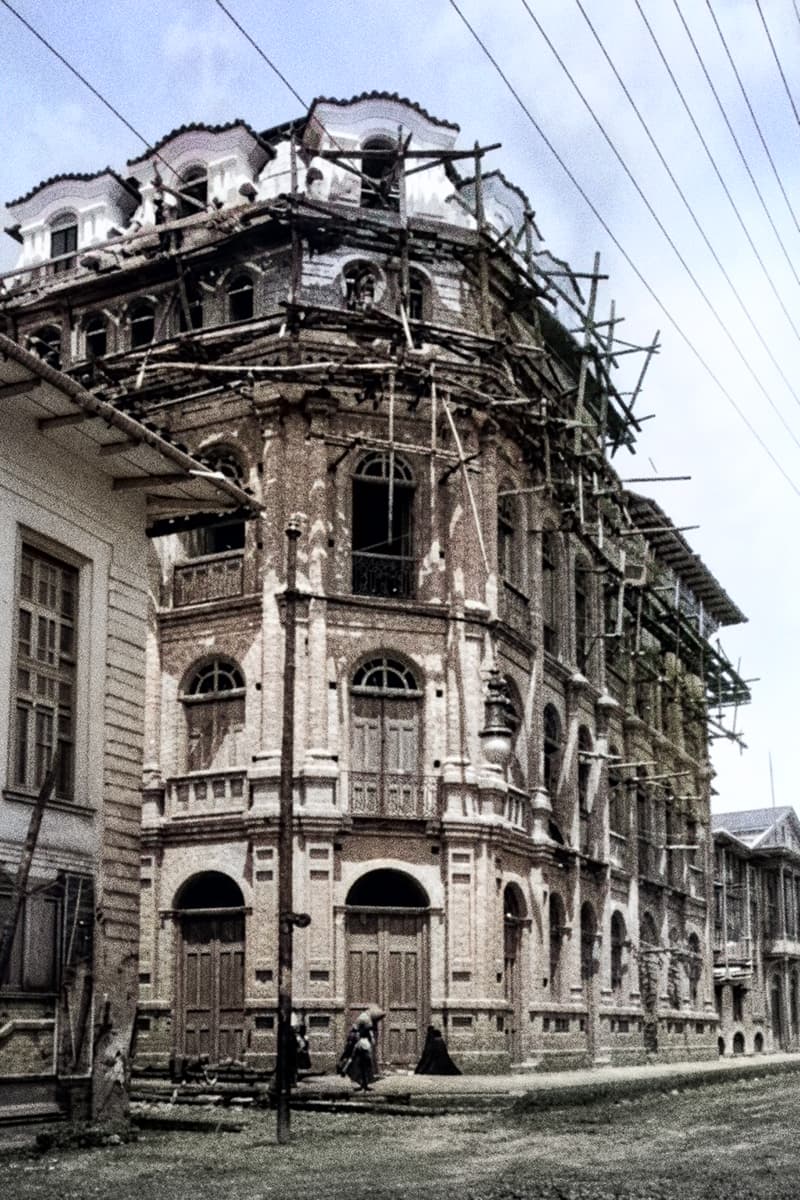
His descendants held onto the property for over a century. In the 1920s, his granddaughter Mariana Malo y Torres and her husband, José María Montesinos Idrovo, built the structure that stands there today.
Montesinos owned a hardware store and maintained correspondence with Europe. Through this channel, he obtained a French magazine featuring the façade he decided to replicate. He personally guided the local Cuenca craftsmen, sketching each stage of the construction in charcoal. The result combines two traditions: a building with a central courtyard—typical of the Cuenca homes of that era—and a French-inspired façade.
Cuenca was then enjoying an economic boom thanks to the export of toquilla straw hats, the same ones the world knows as Panama hats. Decades earlier, cascarilla—the bark from which quinine was obtained—had opened the city’s first trade routes to Europe. The families who prospered brought materials, ideas, and ways of building back from Europe, and the Parc Royal building is part of that story.

Hotel Patria
Chapter 2 · 1926 – 1950
One of Cuenca’s first luxury hotels
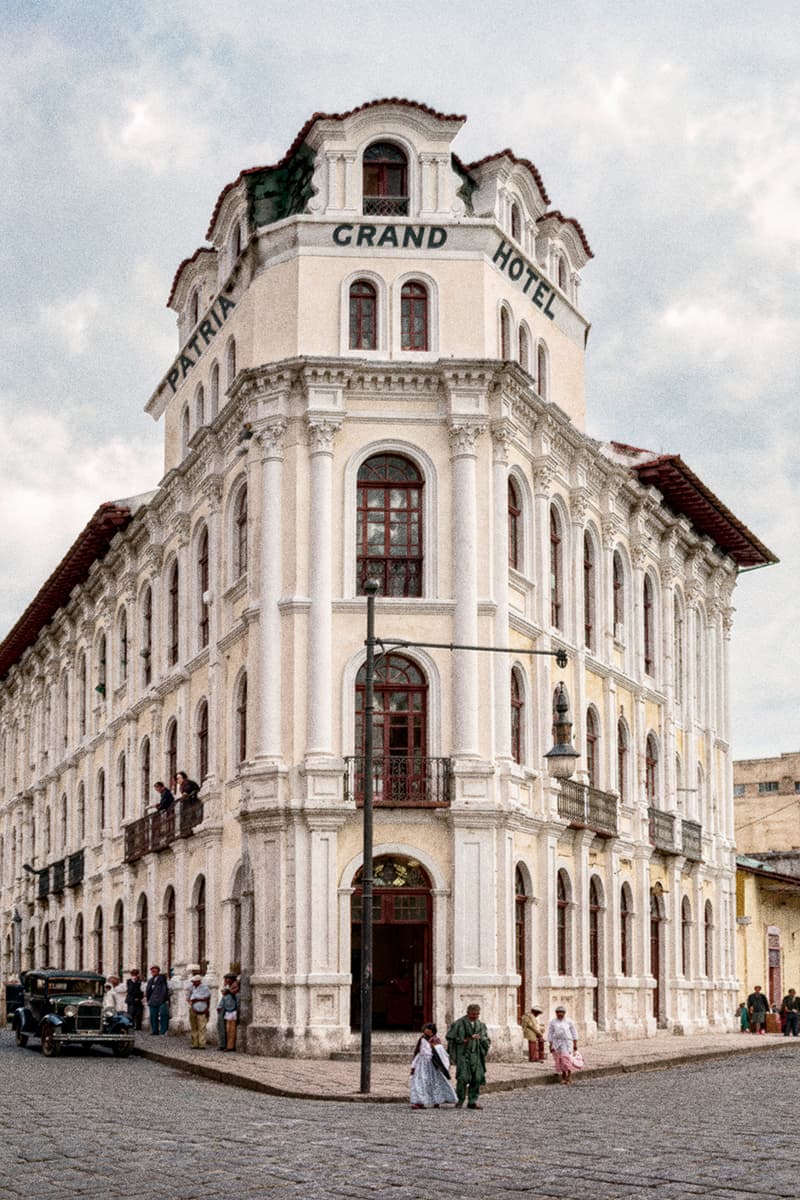
The building was constructed to serve as a hotel. The Montesinos Malo couple conceived it as a luxury lodging establishment in a city where the hotel industry was only beginning to develop professionally. Hotel Patria opened here in 1926; it soon added the Nilo restaurant and gained recognition as the best hotel in Cuenca—the first in the province to offer service comparable to the grand hotels of Quito and Guayaquil.
Travelers from both within the country and abroad passed through its halls, and the city chose it as a venue for its celebrations. Around 1928, a reception was held here in honor of Homero Viteri Lafronte, Ecuador’s Minister of Foreign Affairs at the time. The hotel operated until 1950.
In the 1930s, the Hotel Internacional opened just a few meters away; it had been built by a family of toquilla straw hat exporters to accommodate their international clients. Together, these two establishments made this stretch of Gran Colombia Street the place where Cuenca welcomed its visitors.
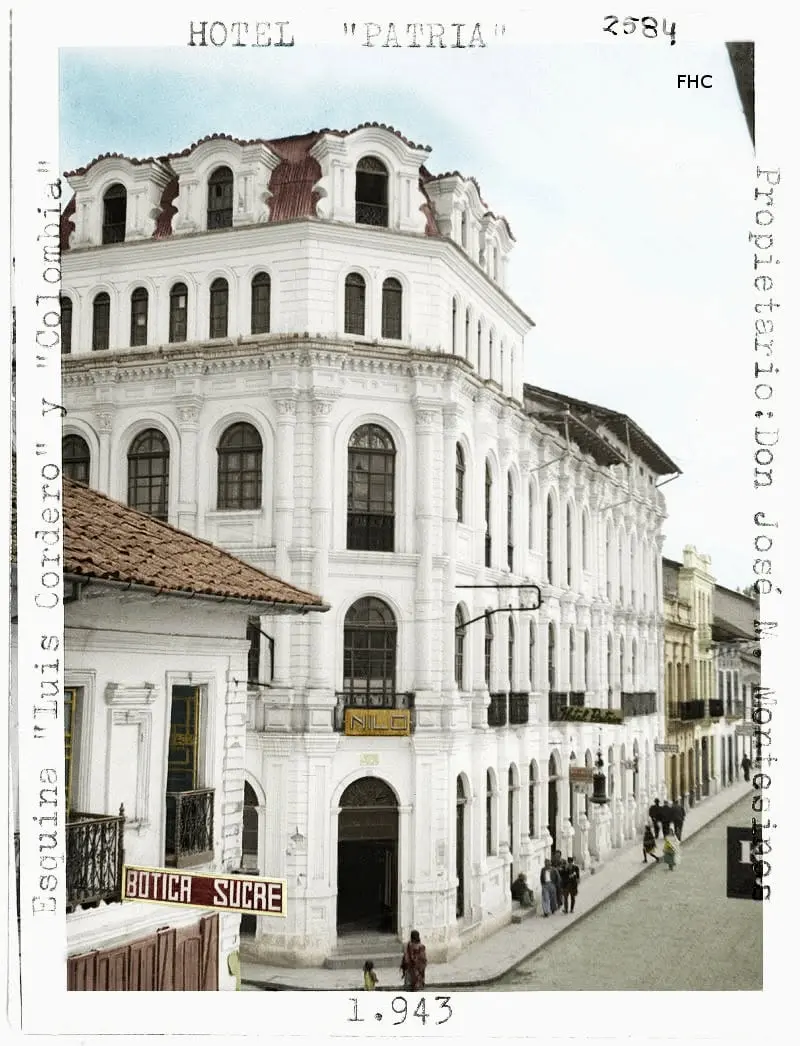
Hotel Patria, corner of Luis Cordero and Gran Colombia, 1943.
The Vázquez family
Chapter 3 · 1943 – 1969
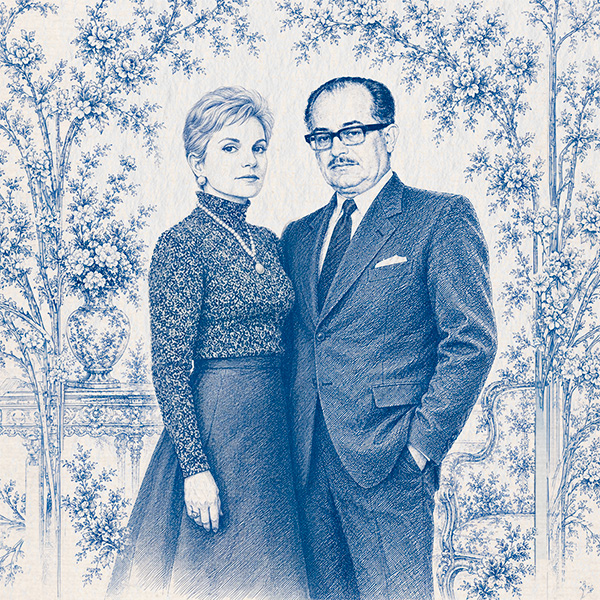
Rocío and Guillermo Vázquez.
The Craft of Detail
Guillermo Vázquez Astudillo began as a goldsmith’s apprentice at the age of 14. In 1943, he opened his first jewelry store alongside his siblings Polivio and Marujita—just a few meters from this corner—and over the years, the business expanded to eight cities across the country.
In 1969, he purchased the old Hotel Patria; its rooms were later converted into offices and apartments. In the 1970s, he spearheaded the development of Hotel El Dorado, marking the beginning of modern hospitality in Cuenca.
Rocío
Chapter 4 · 1998 – today
The Building Becomes a Hotel Again
Rocío Vázquez, the youngest of four siblings, grew up amidst the display cases of her father’s jewelry store. She studied psychology and French in Switzerland for two years. Afterward, she lived in the United States for five years, where she started as a sales associate at a French children's clothing store and rose to the position of manager.
Upon returning to Cuenca, she managed Hotel El Dorado—the hotel with which her father had ushered in the city's modern hospitality era—for ten years. In 1998, she served as Ecuador’s Minister of Tourism. She also established the Mansión Alcázar Boutique Hotel, located in a late-19th-century house in the historic center.
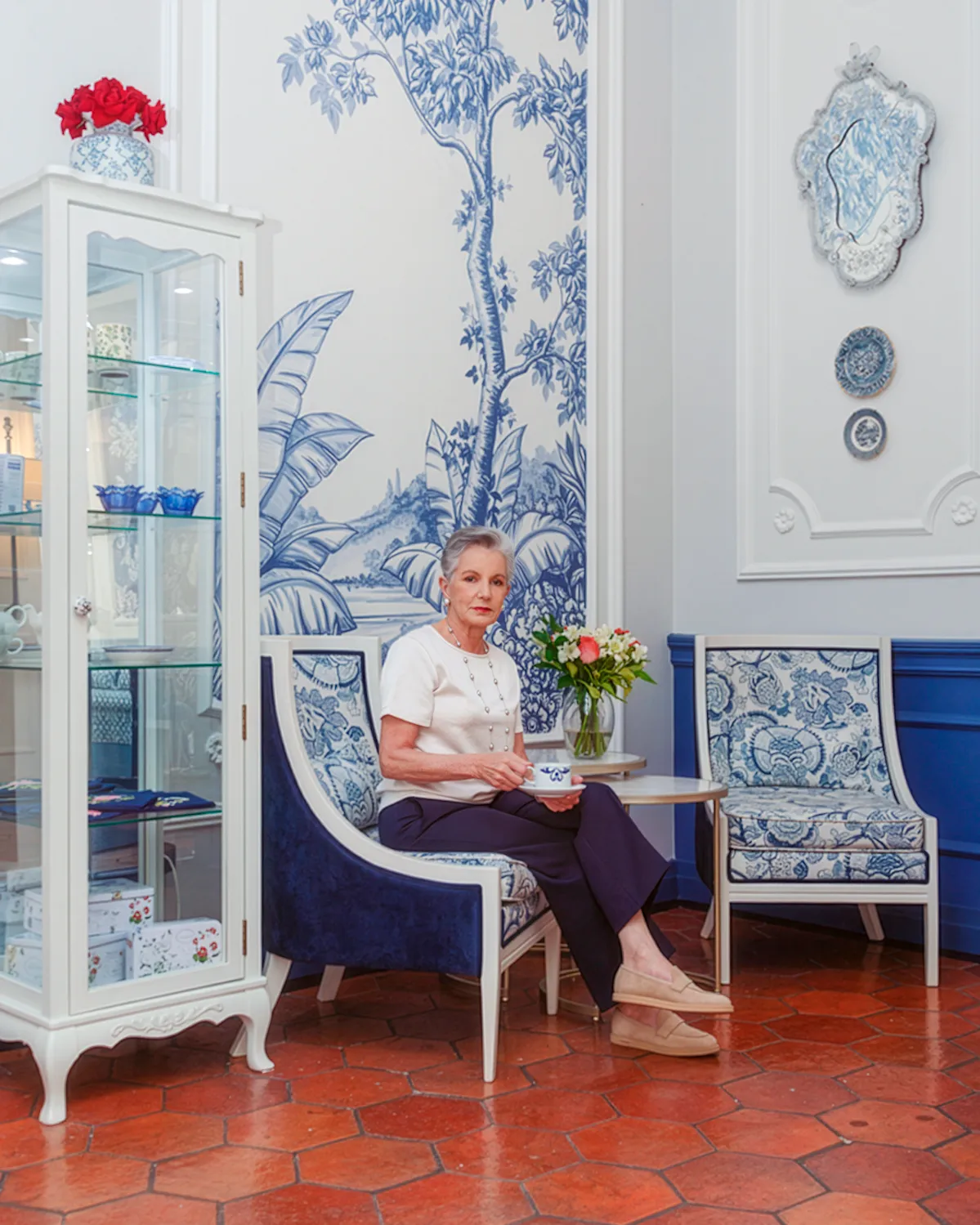
“Often, it is not the space that changes. It is your way of seeing it.”
Rocío Vázquez
In 2013, Rocío undertook an initial renovation: she installed a panoramic elevator next to the central courtyard and created Suites Gran Colombia, a lodging concept designed for extended stays. The concept was warm, yet the space called for something different. The family consolidated the property, and—nearly a century after the days of Hotel Patria—the building once again became a hotel. Thus, Parc Royal was born.
The transformation
The style of the building
From Suites Gran Colombia to Parc Royal
The inspiration stems from toile de Jouy, an 18th-century French decorative tradition featuring pastoral scenes and landscapes in a single color. This gave rise to the blue-and-white palette that runs throughout the hotel.
In the lobby and the first-floor entrance, frescoes by artist Fausto Merchán engage in a dialogue with the light from the central courtyard and the history held within these walls.
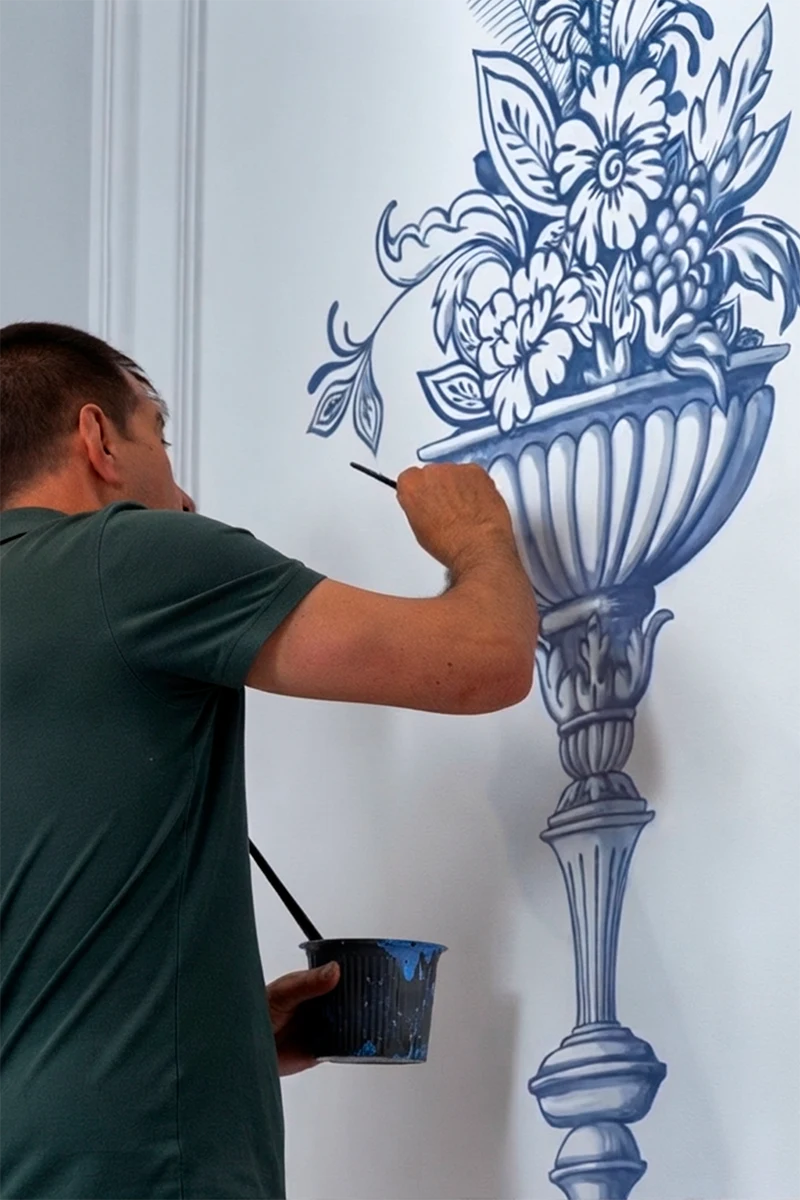
01
Frescoes
Hand-painted by Fausto Merchán.
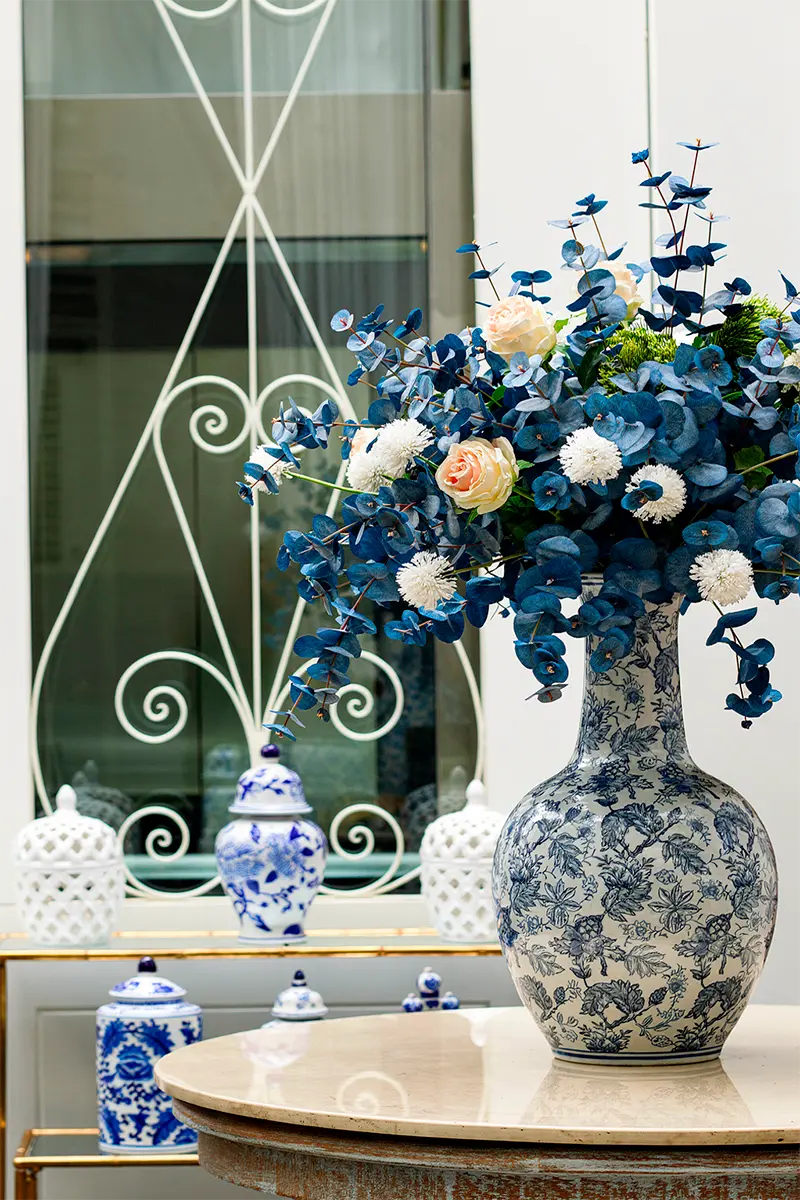
02
Details
Porcelain, ironwork, textiles. Every piece was selected specifically for this space.
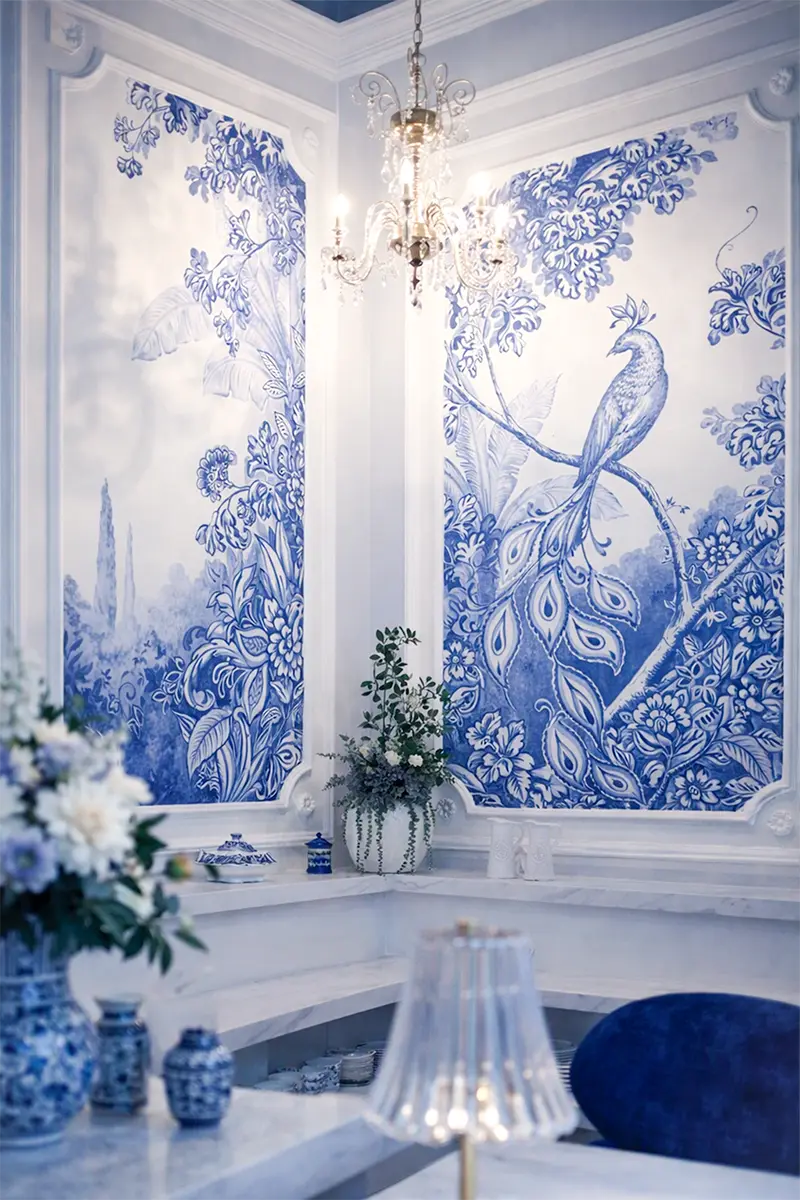
03
Toile de Jouy
The French tradition adorning the suite walls.
Parc Royal’s French Trail
Cuenca, with a French touch
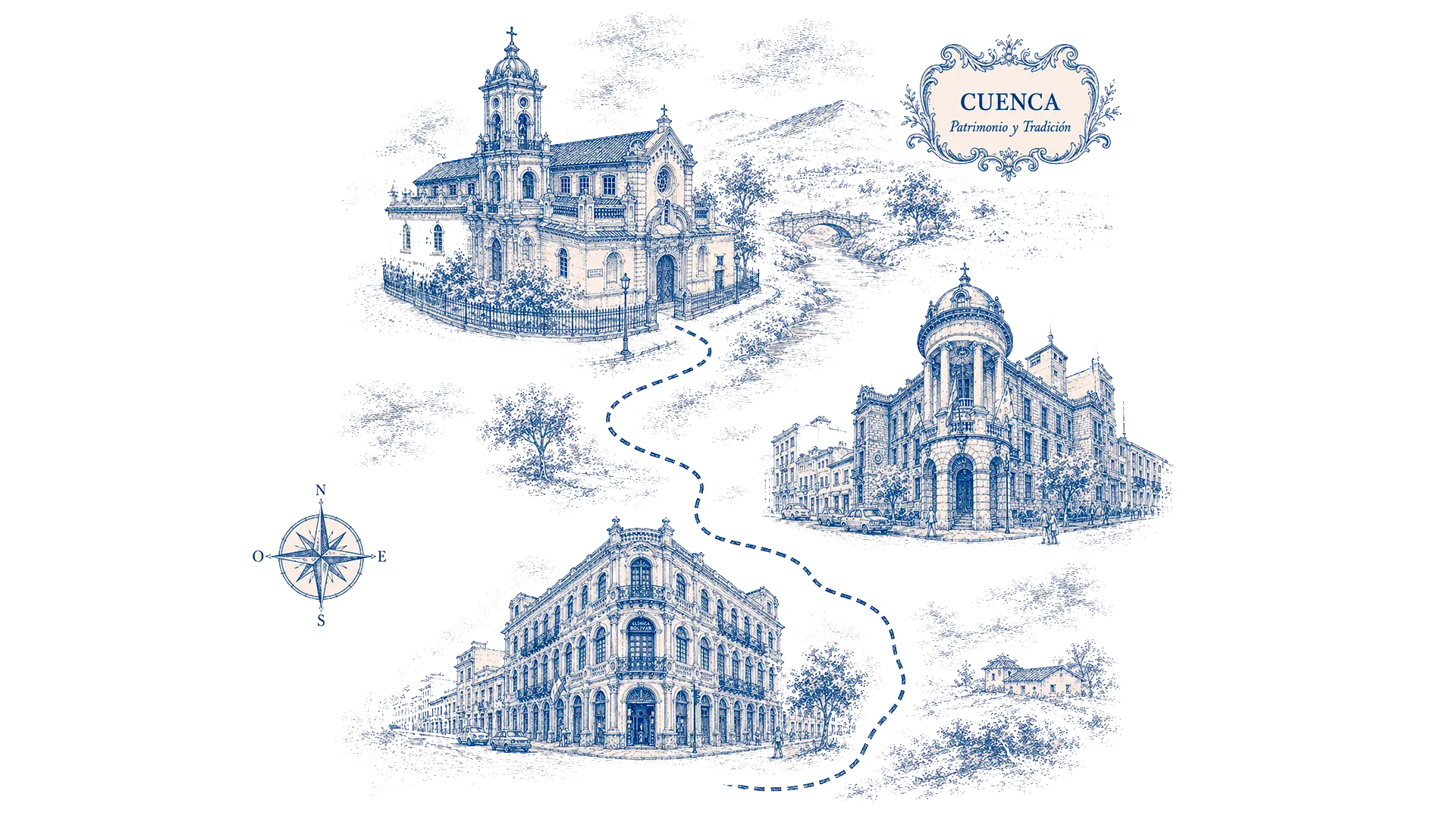
Parc Royal serves as the starting point for our tour of Cuenca’s French Trail, which brings together buildings that reflect the affinity between the city and France.
The relationship began in 1739, when the First French Geodesic Mission arrived to measure the shape of the Earth, using the tower of the Iglesia Mayor—now known as the Old Cathedral, located 200 meters from the hotel—as a reference point. That tower was demolished in the late 19th century; a plaque now commemorates it with a phrase written in 1804: "A tower more famous than the Pyramids of Egypt." The expedition, led among others by the French scientist Charles-Marie de La Condamine, left in Cuenca a stone tablet recording its results, now kept at the Remigio Crespo Toral Museum.
In the following century, the export of cinchona bark (cascarilla) and, later, toquilla straw hats drew families from Cuenca to Europe. Those journeys brought back the ideas that transformed the city: the former Banco del Azuay (now City Hall); homes decorated with imported embossed tin and wallpaper; and the stained-glass windows of San Alfonso Church, crafted in Toulouse.
Timeline
1739The First French Geodesic Mission uses the tower of the Main Church as a reference point.
1822 Simón Bolívar appoints General Ignacio Torres Tenorio as governor of Cuenca. Tradition places his home on this corner.
1825 – 1885Cuenca exports cinchona bark, and local families begin traveling to Europe.
1913 Exports of toquilla straw hats begin.
1920s The building at Luis Cordero and Gran Colombia is constructed. Hotel Patria opens there in 1926.
1969Guillermo Vázquez acquires the building.
2013Suites Gran Colombia is established.
2025The building becomes a hotel again: Parc Royal opens.
In the media

Have a date in mind?
Book directly. Best available rate.