Parc Royal French Trail, in Cuenca’s historic center
TWELVE ARCHITECTURAL GEMS JUST STEPS FROM THE HOTEL
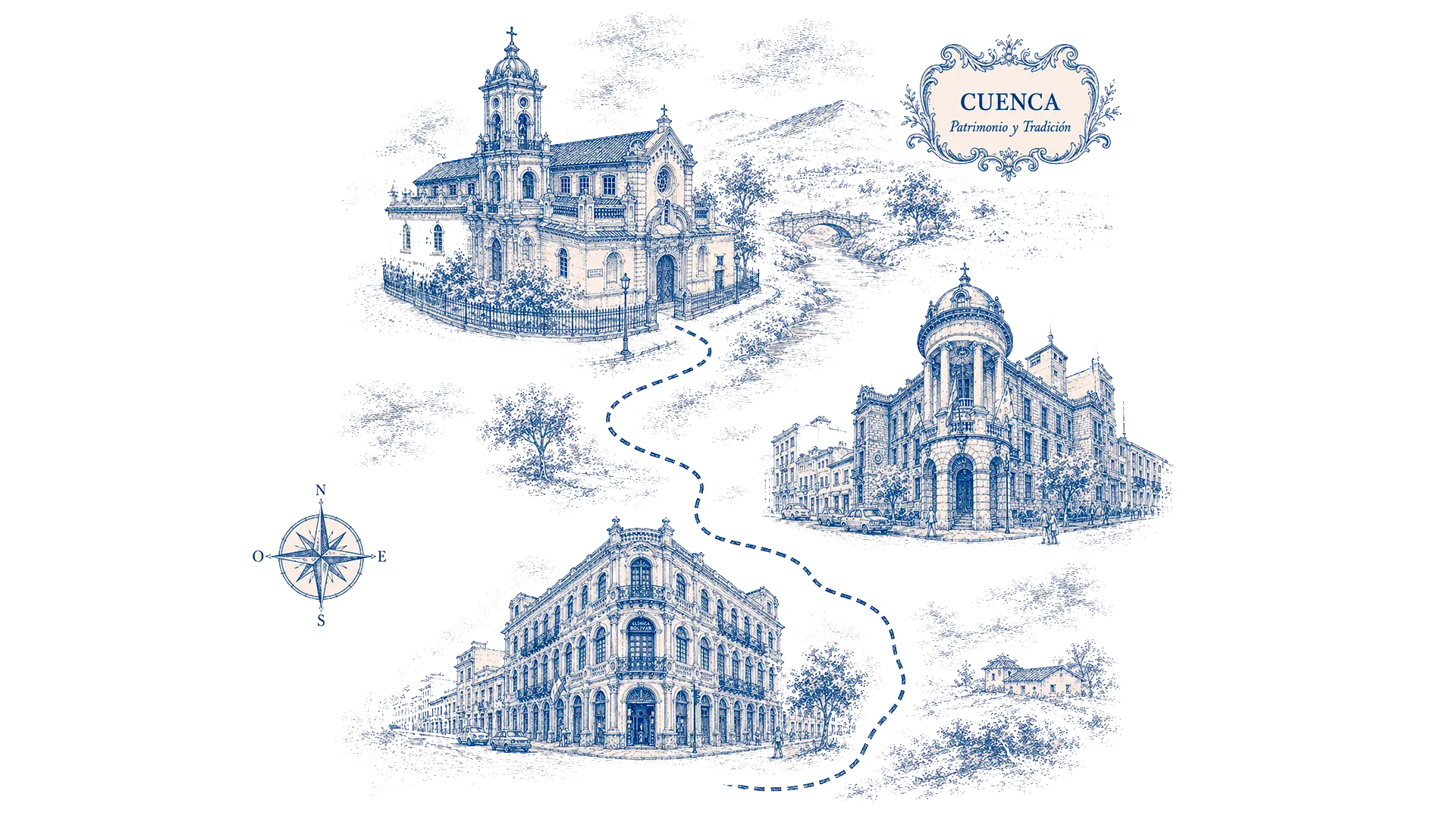
Inspired by Cuenca’s "French Route," this circuit offers a walking tour of the historic center, declared a UNESCO World Cultural Heritage Site in 1999. It begins and ends at the doorstep of Parc Royal.
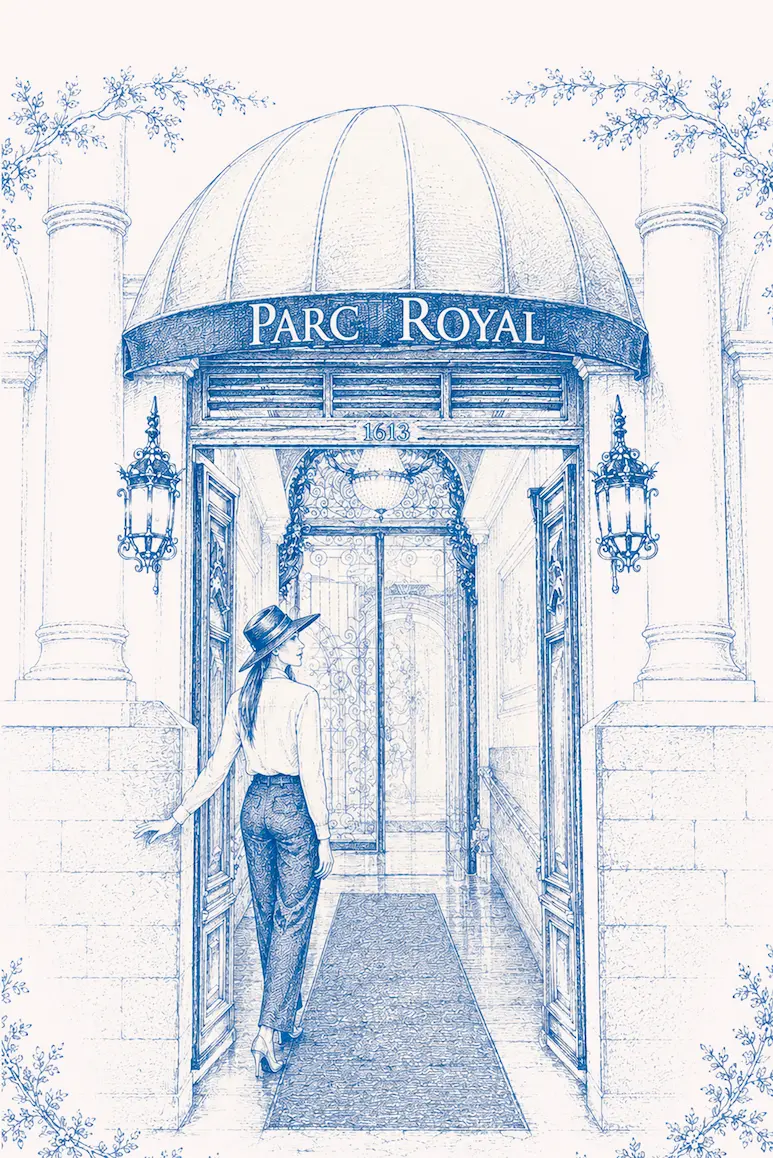
STARTING POINT · Parc Royal Hotel
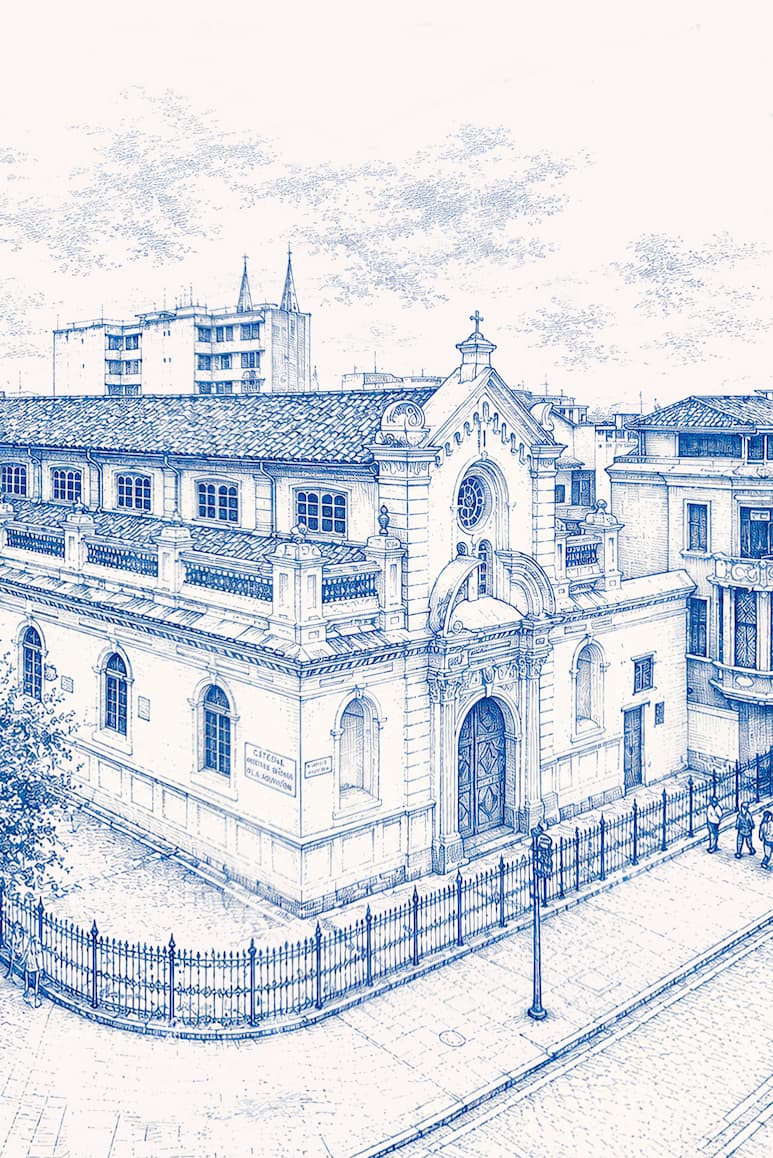
STOP 08 · Old Cathedral
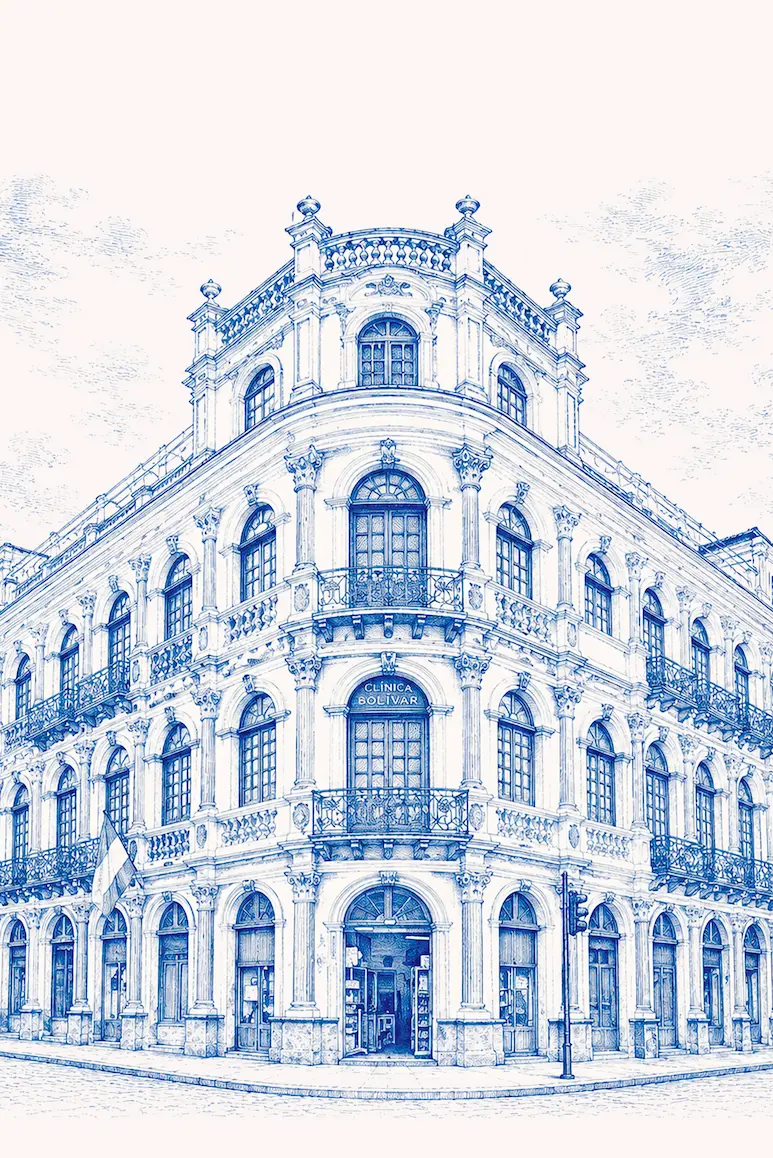
STOP 05 · Former Bolívar Clinic

Between 1825 and 1885, Cuenca exported cascarilla—the bark used in Europe to produce a remedy for malaria—thereby opening its first trade routes to the Atlantic. From 1913 onwards, the toquilla straw hat followed that same path to the United States and Europe. With the wealth generated by these businesses, merchant and landowning families from Cuenca would travel to the Old Continent and return with magazines, catalogs, and materials to build and decorate their homes. Others acquired these items from importers established in the city who supplied Ecuadorian families with such goods. French taste permeated almost every aspect of city life—to the point where French was spoken within these homes.
Nevertheless, the structures built in Cuenca during that era retain a unique character of their own. Local master builders erected facades inspired by those European images, while preserving the central courtyard, adobe construction, and proportions typical of the traditional Cuenca home.
The Cuenca Municipal Tourism Foundation created the "French Route"—promoted since 2016—as a tour of the buildings from that era located in the historic center.
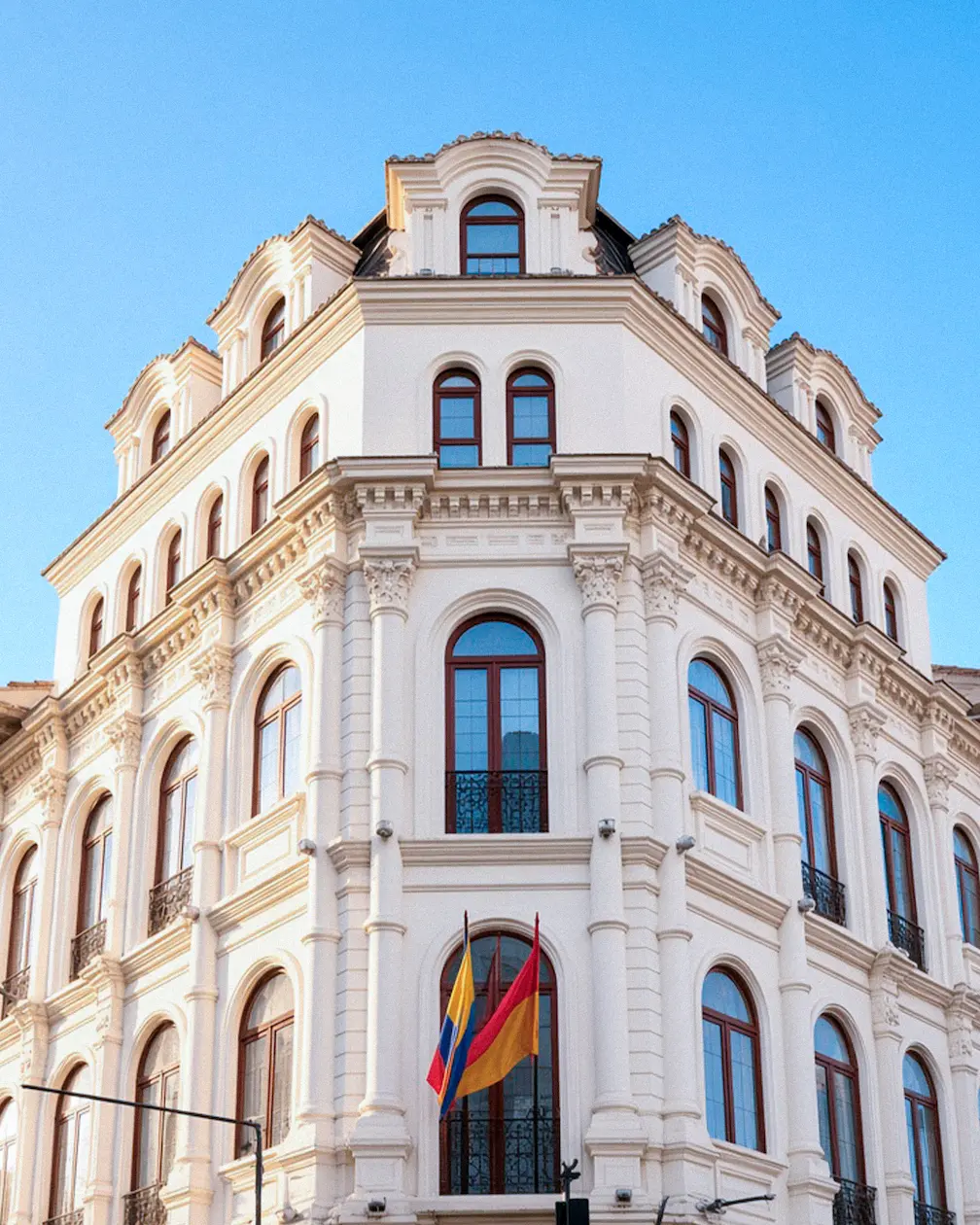
The Parc Royal, featuring a mansard roof at the corner of Luis Cordero and Gran Colombia streets, is one of these buildings. Starting from its entrance, we propose our own twelve-stop itinerary that descends to the banks of the Tomebamba River before returning to the starting point. The Tomebamba is the largest of the four rivers that flow through Cuenca, along with the Yanuncay, the Tarqui, and the Machángara, which is why the city is known as Santa Ana de los Cuatro Ríos de Cuenca. It rises in the lakes of Cajas National Park and runs at the foot of El Barranco, the slope that separates the historic center from the modern city. Its name recalls Tomebamba, the Inca city on whose ruins Cuenca was founded.
Route details
1.6 kilometers · 12 stops · approximately two hours of walking, or about three hours if visiting the museums.
The route begins at the hotel, proceeds along Bolívar Street to the western edge of the city center, returns via Sucre Street to Calderón Park, and descends along Presidente Borrero Street to Calle Larga. From there, it heads up that same street to Bolívar Street and returns to the hotel via Gran Colombia Street.
It is recommended to start mid-morning on a weekday; museums close between 4:00 PM and 5:00 PM, and the Old Cathedral remains closed at midday.
The stops
Start
Parc Royal Hotel
Luis Cordero 10-13 & Gran Colombia
01
Jerves Calero House
Simón Bolívar 8-44
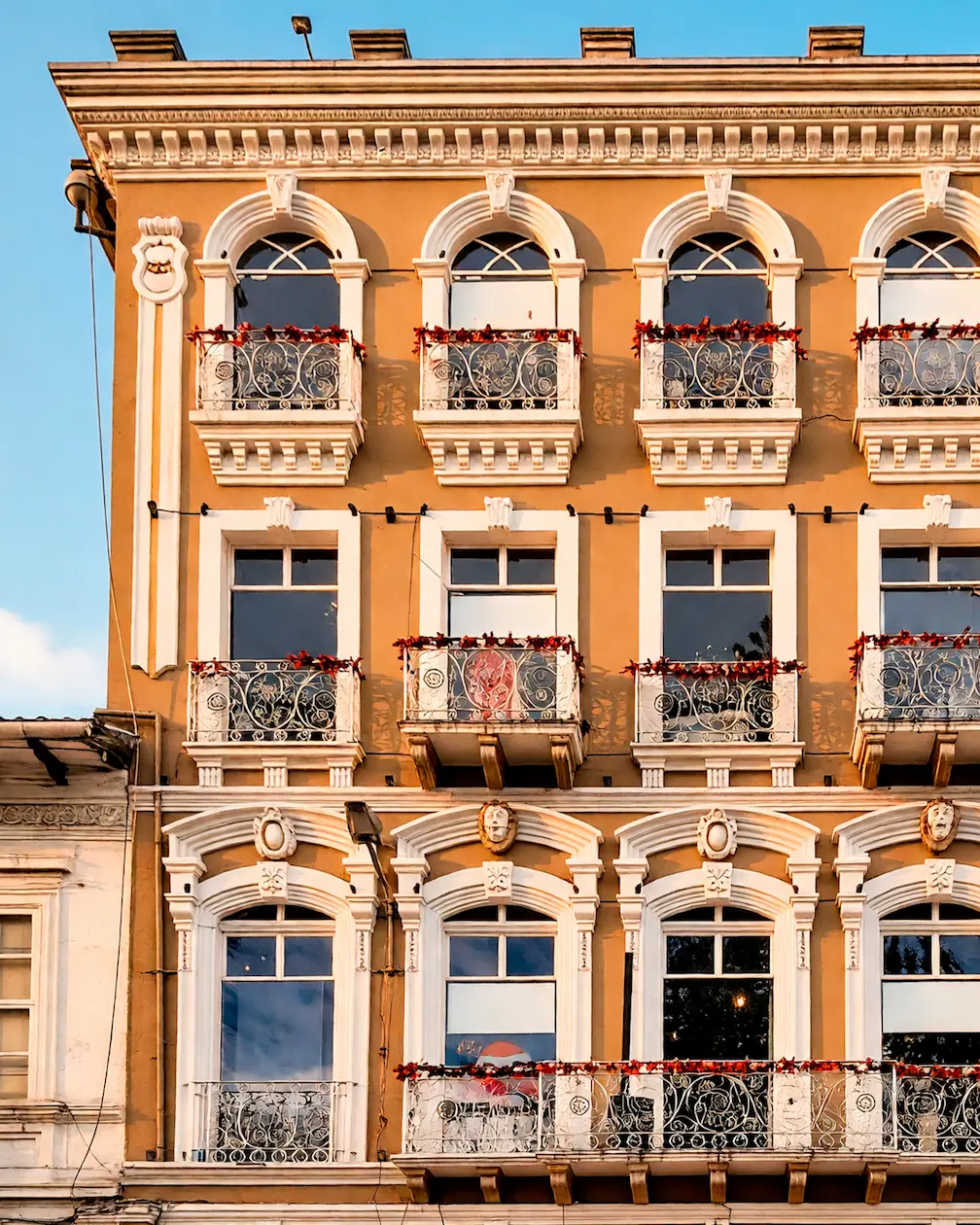
Darío Calero Illescas and Leonor Jerves Vega commissioned its construction in 1917. The main hall preserves its embossed tin ceilings—imported from France—and gold-leaf-covered wood carvings above the large windows.
Today, a commercial establishment operates here. Open Sunday through Thursday, 10:00 AM to 9:00 PM; Friday and Saturday, 10:00 AM to 10:00 PM. Free admission.
Bolívar Street was laid out at the city's founding as the main thoroughfare, oriented toward the sea to facilitate trade with Guayaquil. The goods that adorned these houses arrived via this street, and the city center's most ambitious facades were built along it. Eight of the twelve stops on this tour are located along its route.
02
Sojos House
Simón Bolívar 9-08 & Benigno Malo
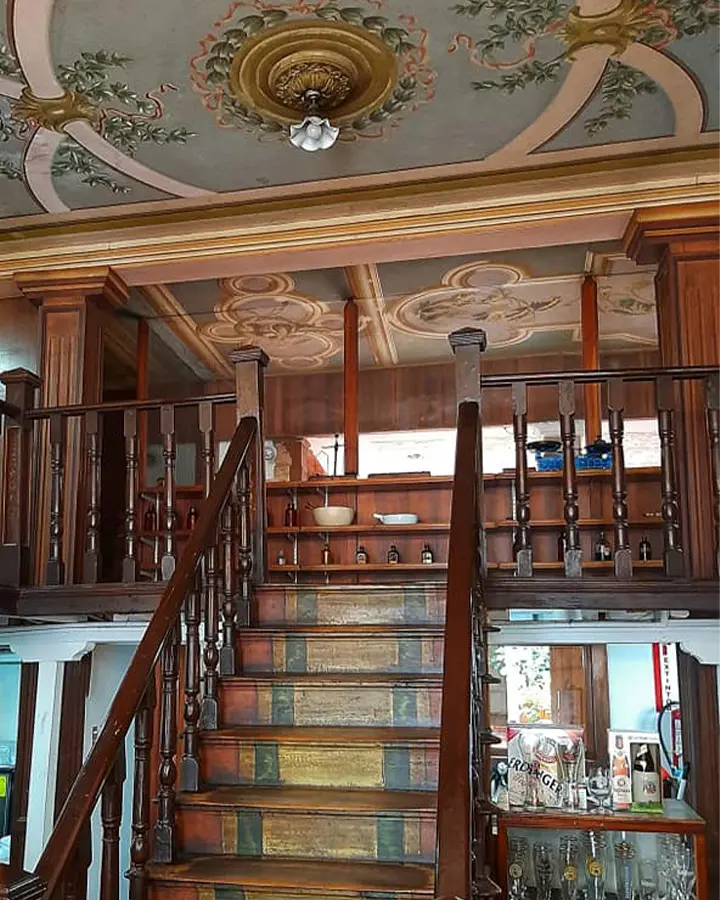
Dr. Benjamín Sojos acquired the house in 1907 and, in 1910, built a new facade—the first in Cuenca made with cement imported from France. Ecuador did not produce its own cement until the 1920s, so every sack traveled by ship to Guayaquil and was then transported up to the highlands. The material allowed for the molding of cornices, pilasters, and garlands with a level of precision unattainable with adobe and lime plaster, finally making it possible to execute the ornamental designs found in European catalogs.
On the ground floor, the botica—as pharmacies were called at the time—founded by Dr. Sojos himself is still open. It retains its original wooden furniture and still sells lotions, oils, and imported products, many of them German. From there, visitors can step into the interior courtyard.
Open during business hours. Free admission.
03
Provincial Education Office
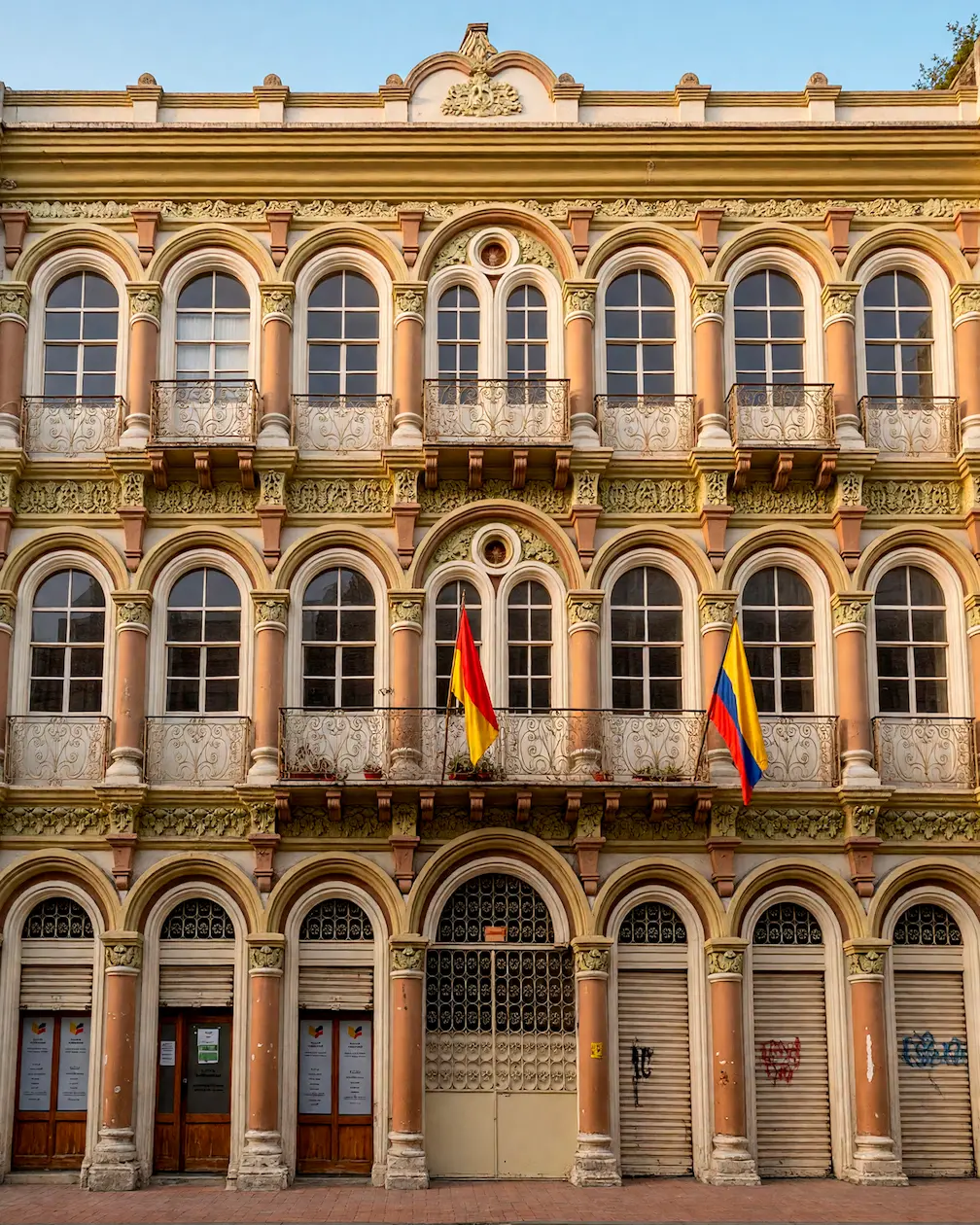
Simón Bolívar 10-63 and General Torres
Dating back to the 1930s—a time when the Republican Neoclassical style had already established itself as the standard for the city's public buildings—this structure is one of the final examples of that architectural style on Bolívar Street. Today, it houses the provincial education offices.
Office hours. The façade can be viewed from the street.
04
Casa del Coco
Simón Bolívar 12-60 and Juan Montalvo
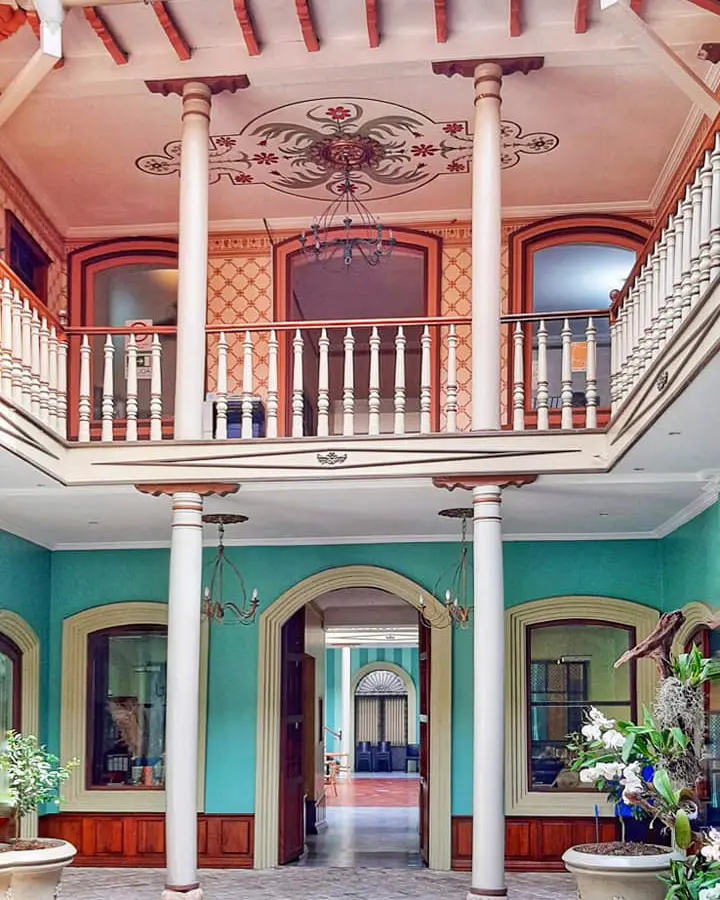
Built in 1890 for Florencia Astudillo Valdivieso—one of the region's wealthiest women—this house features two courtyards and a private oratory. It blends the traditional colonial-style home of Cuenca with European decorative elements that were imported by special order at the time. Ernesto Moscoso restored the building in 1998 for commercial use.
Visitors can explore the ground floor, which houses a café and retail shops. Business hours. Free admission.
05
Former Bolívar Clinic
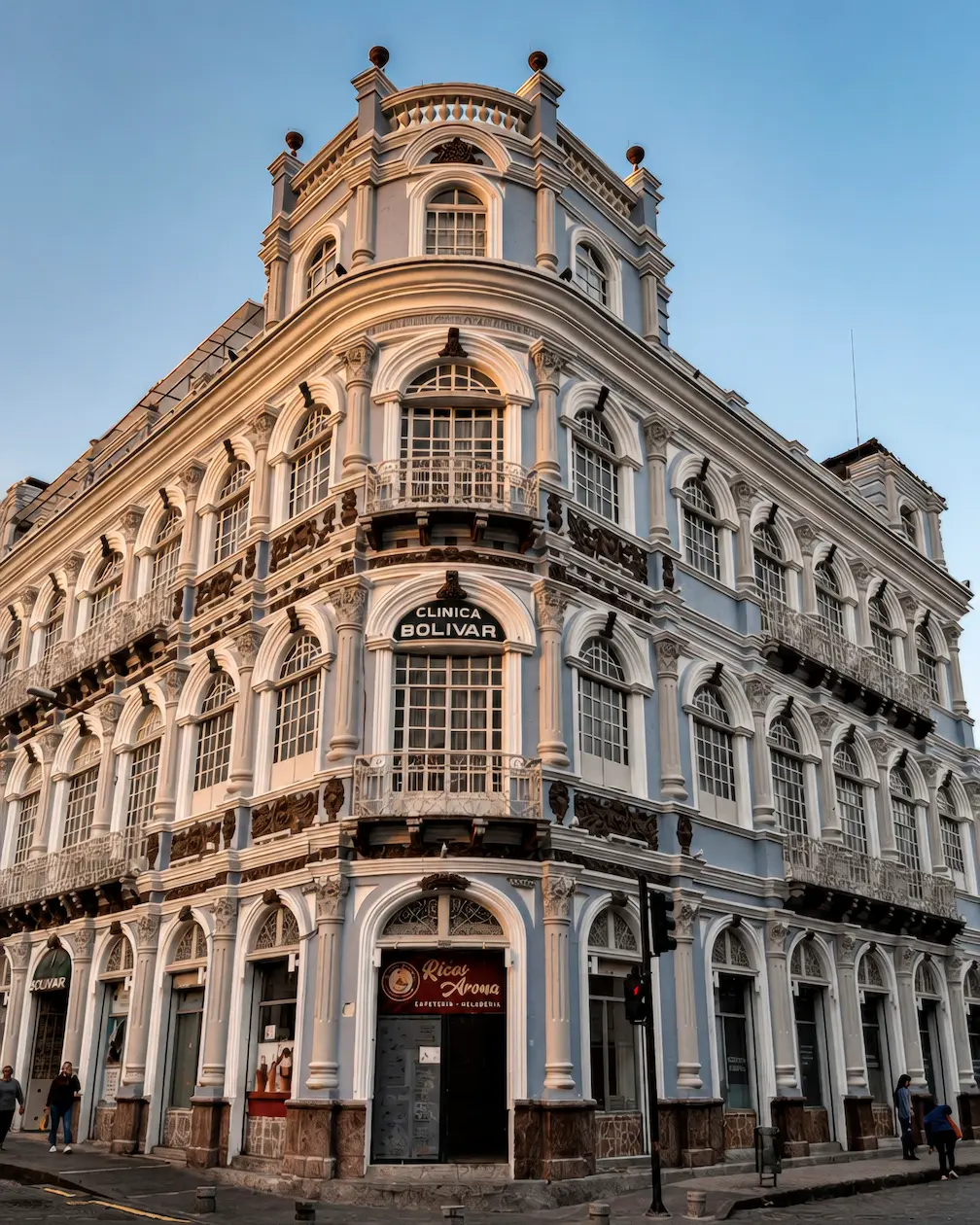
Simón Bolívar 13-14 and Juan Montalvo
Manuel Felipe Ullauri Romero built this structure for his family in 1929, following the French Neoclassical style. From 1982 and for the next four decades, it housed the clinic that eventually gave the building its name.
The building is closed to the public, so it can only be viewed from the sidewalk.
06
Biennial House
Simón Bolívar 13-81
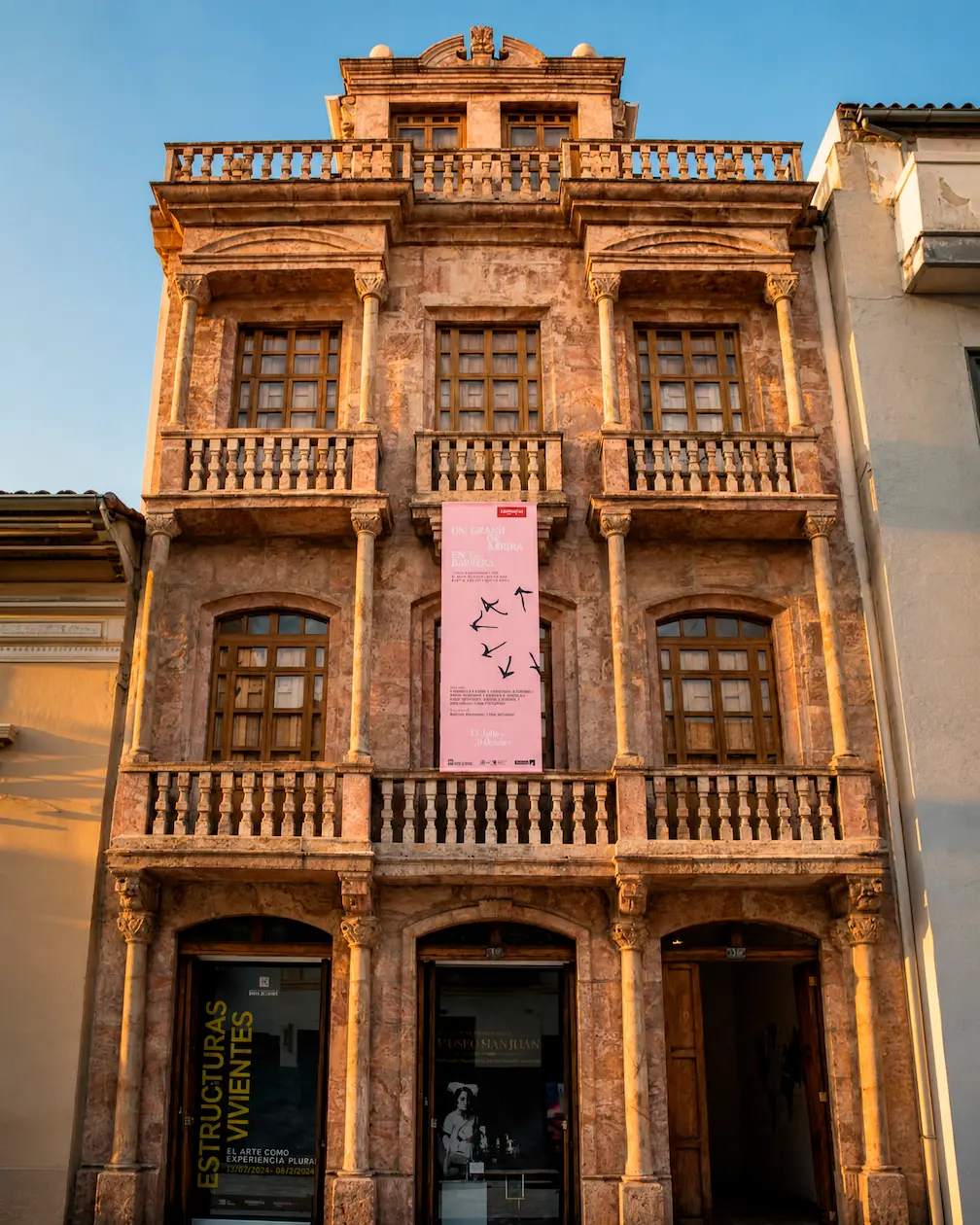
José Antonio Alvarado purchased the house in 1907 and redesigned it based on European postcards. He imported and sold sheet metal and wallpaper for homes in Cuenca, so his own house effectively became a catalog for his business: featuring some six hundred square meters of sheet metal—used in moldings and ceilings—alongside wallpaper and murals depicting pastoral scenes. Since 1994, it has served as the headquarters of the Cuenca Biennial Foundation.
The ground floor is open to visitors Monday through Friday, from 8:00 AM to 1:00 PM and 3:00 PM to 6:00 PM. Free admission.
07
Calderón Park
Between Bolívar, Sucre, Benigno Malo, and Luis Cordero streets
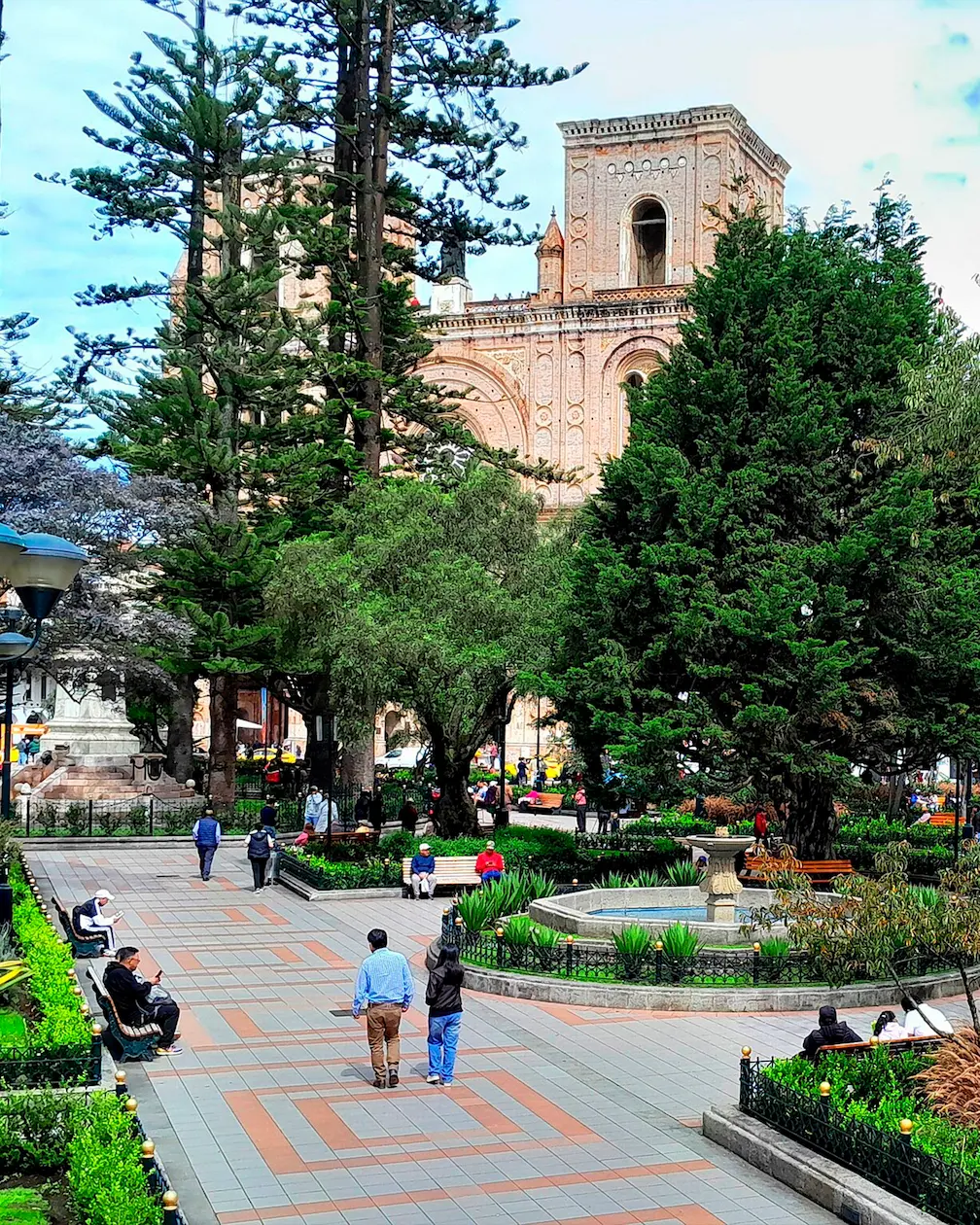
Originally the Plaza de Armas (main square) in the city's founding layout, it remains Cuenca's civic center, surrounded by the grand houses that defined the city in the early 20th century. The eight Araucaria trees were brought from Chile and planted in 1875 by Luis Cordero Crespo, who would go on to become the country's president years later. The monument to Abdón Calderón, a hero of independence who died at the age of 17, cast by sculptor Carlos Meyer, was erected in 1931.
Open at all times.
08
Old Cathedral (Catedral Vieja)
Mariscal Sucre and Luis Cordero · beside Calderón Park
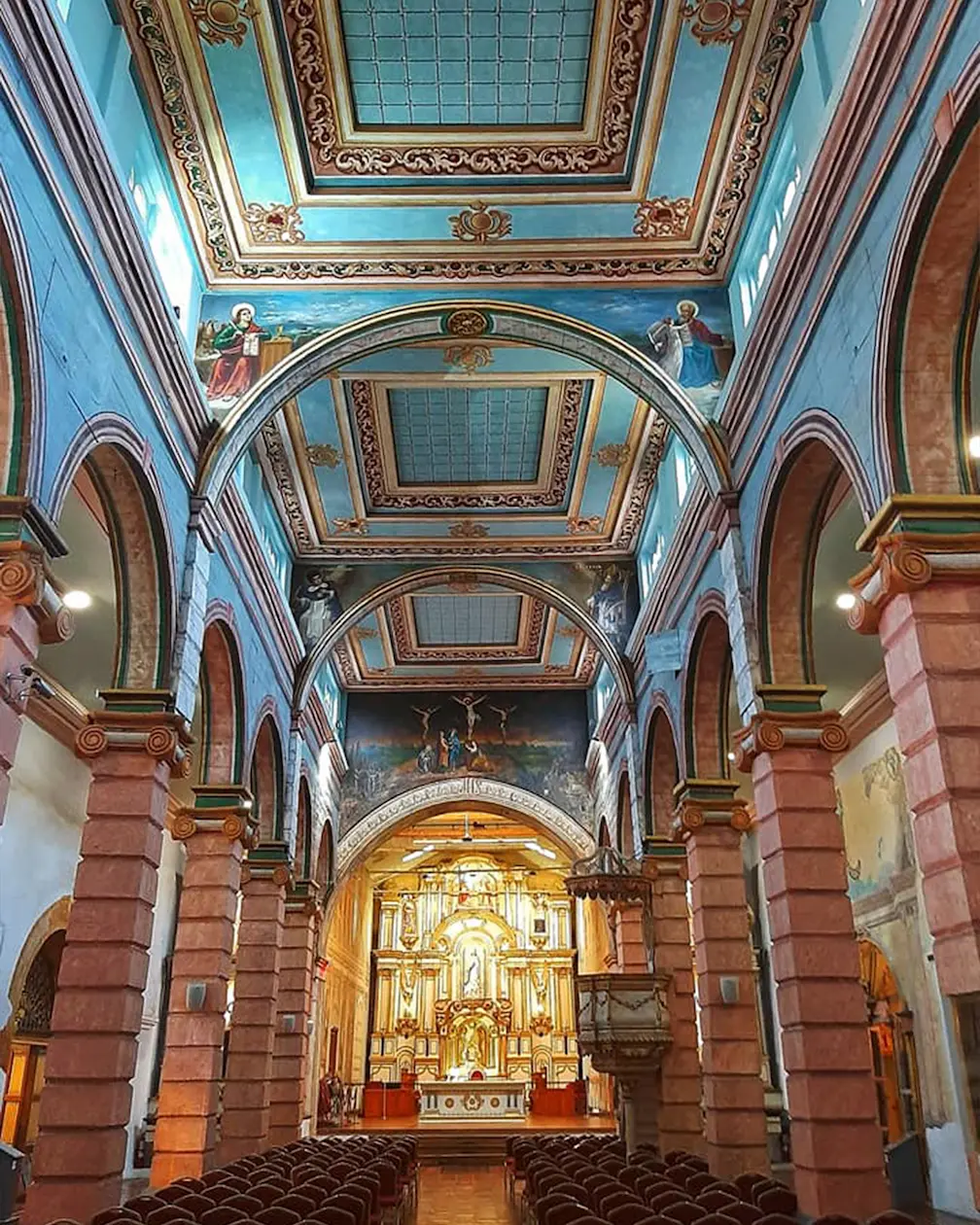
It served as Cuenca’s main church from the city's founding. Construction began in 1557, using stones brought from the Inca ruins of Tomebamba for the foundations and walls. In 1787, upon the creation of the diocese, it became the cathedral—a role it held until the consecration of the New Cathedral. Today, it houses the Museum of Religious Art.
When the French Geodesic Mission arrived in Cuenca in 1739, they used the south tower as a reference point to measure the meridian arc. That tower was demolished in the late 19th century; all that remains is a marble plaque bearing the words written by Francisco José de Caldas in 1804: "A tower more famous than the Pyramids of Egypt."
The plaque is located on the façade and is visible from the street. The museum is open Monday through Saturday from 9:30 AM to 12:40 PM and 2:00 PM to 5:40 PM, and on Sundays from 9:30 AM to 1:30 PM. Admission is USD 2.50; reduced rate USD 1.25. With a guide, the cost is USD 7 and USD 4.
09
Provincial Court of Justice
Mariscal Sucre and Luis Cordero · across the street
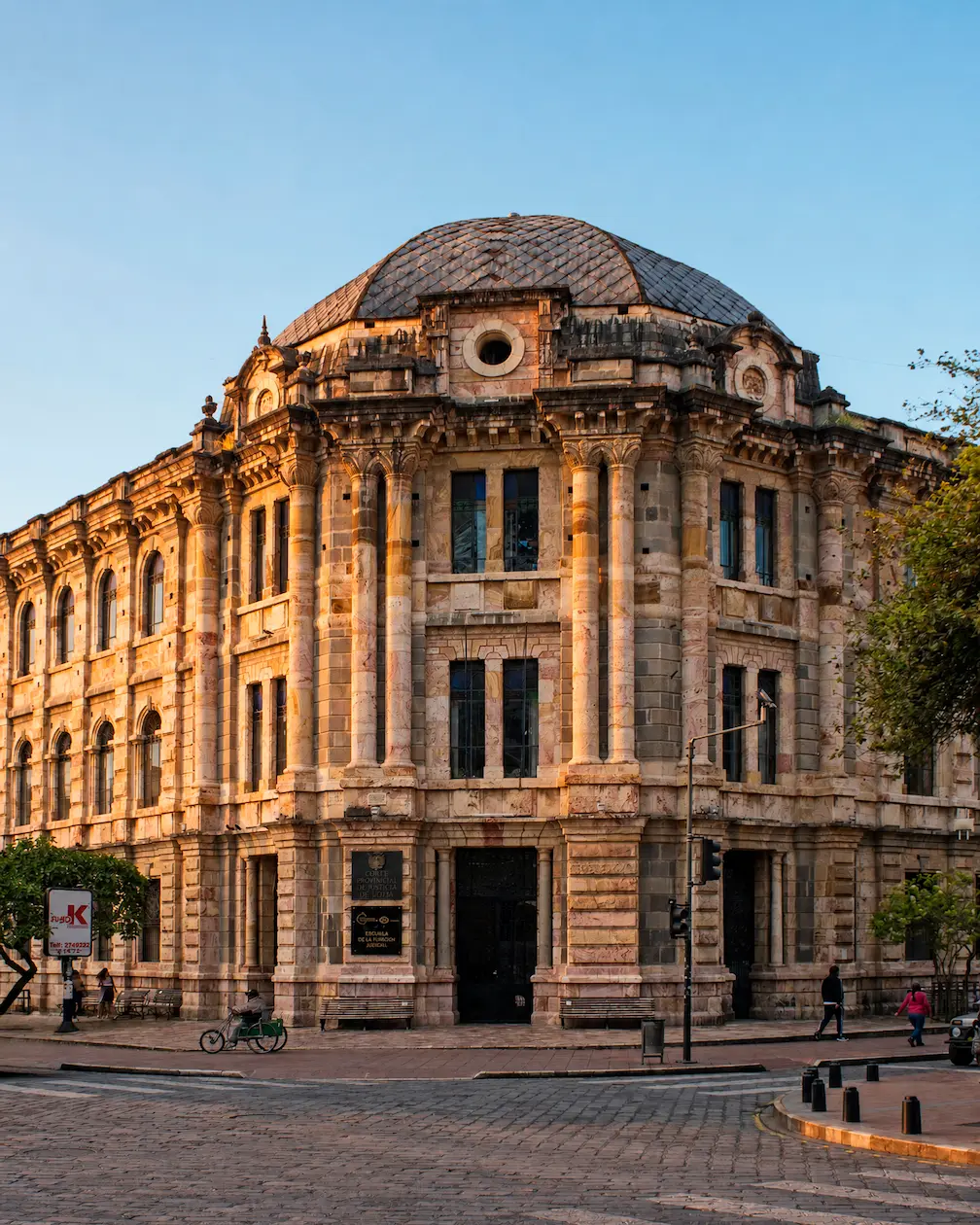
Francisco Espinoza Acevedo designed the building in 1929, drawing inspiration from French Classicism, to serve as the city's first university. The walls are clad in marble from a quarry near Cuenca—polished in the mills along the Tomebamba River—and the foyer is well worth a leisurely visit.
Monday to Friday, 8:00 AM to 5:00 PM. Free admission. It remains a functioning judicial building, so visitors are advised to tour it discreetly.
10
Remigio Crespo Toral Museum
Calle Larga 7-07 and Presidente Borrero
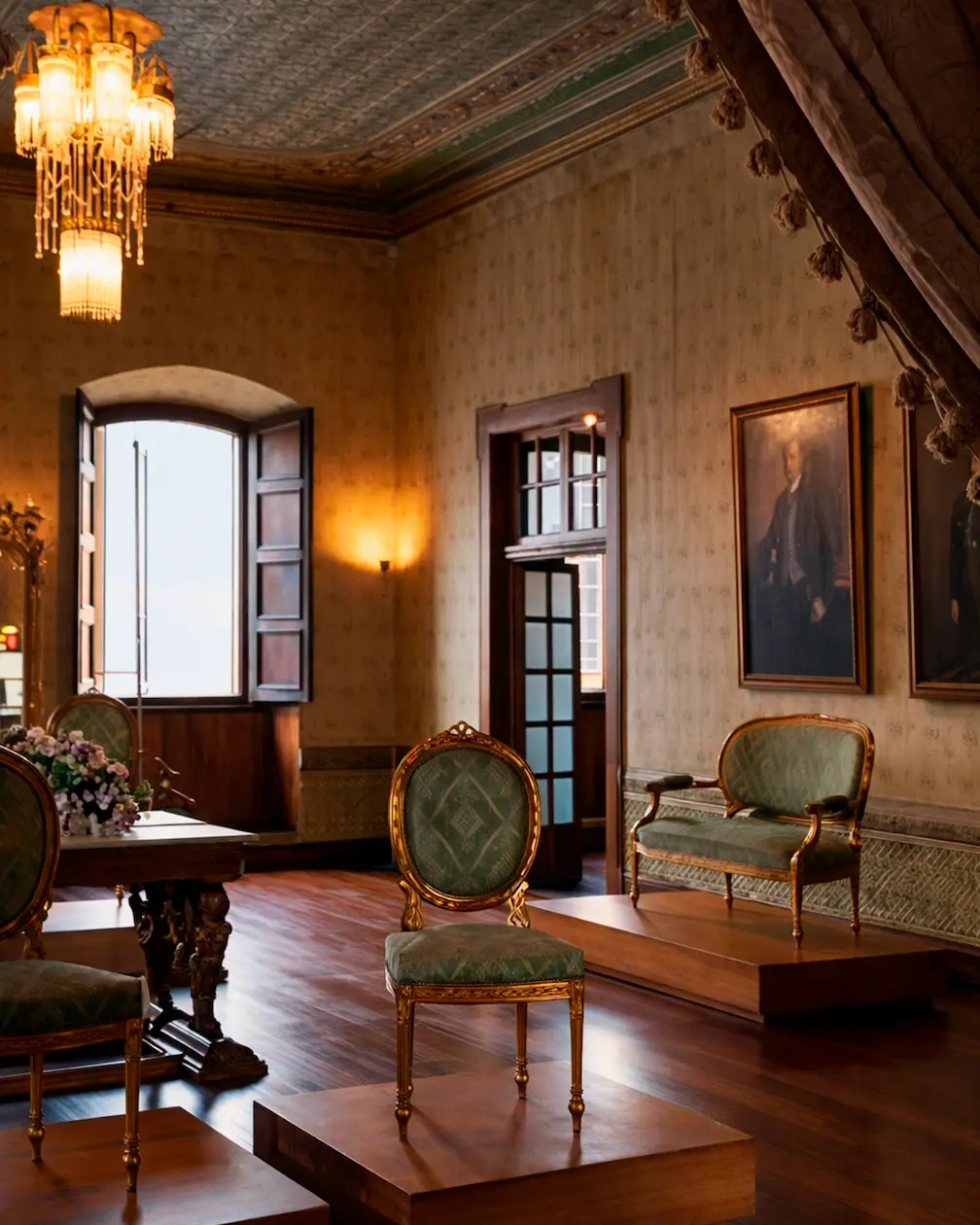
The poet and politician Remigio Crespo Toral began its construction in 1910 under the direction of Chilean engineer Juan Teodoro Thomas Muñoz, later expanding the building after 1917. The interior preserves period rooms featuring tin ceilings, wallpaper, marble from Portete, a quarry in the region, carvings by artisans from Azuay, and a textile collection of 173 pieces made from fabrics imported from Europe. Also housed here is the marble plaque that Charles-Marie de La Condamine, one of the scientists of the French Geodesic Mission, commissioned to record the findings of the expedition.
9:00 AM to 4:45 PM. Free admission; registration at the reception desk is required.
11
San Alfonso Church
Simón Bolívar and Presidente Borrero
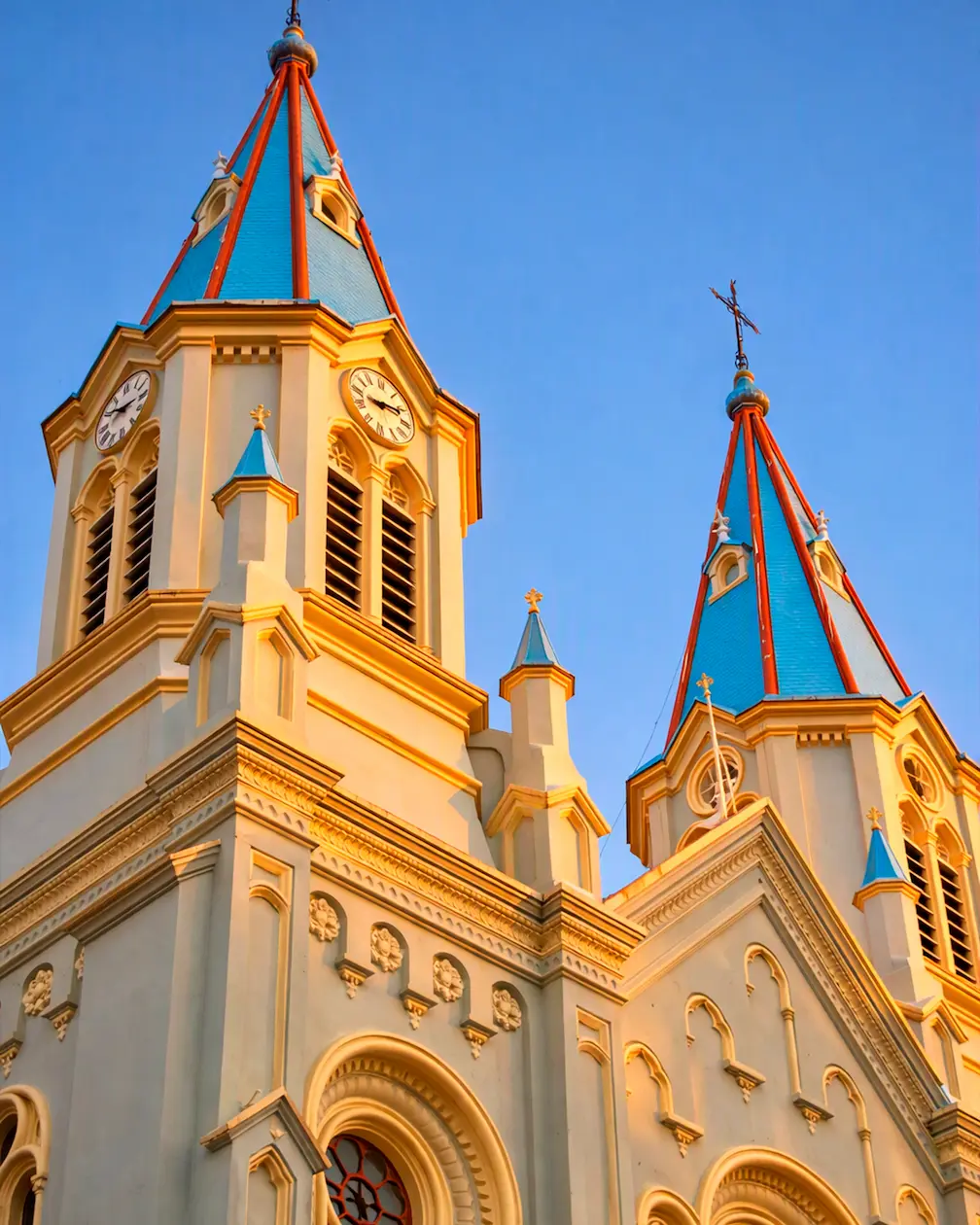
Redemptorist missionaries laid the cornerstone in 1875, and the church was consecrated on December 8, 1888. The plans were drawn up by Brother Juan Bautista Stiehle—who also designed the New Cathedral—in a Neo-Gothic style, featuring two 42-meter towers. Its 92 stained-glass windows were crafted in Toulouse by Henry Louis Victor Gesta; the organ, the Stations of the Cross paintings, and the Pietà sculpture were also imported from France.
The church opens half an hour before each mass: the morning service is at 7:00 AM, and the evening service is at 7:00 PM. During the suggested hours for the trail, the church is usually closed and the façade can be admired from the street. To see the stained-glass windows, it is best to return before the 7:00 PM mass.
12
Cuenca City Hall
Simón Bolívar and Presidente Borrero · across the street
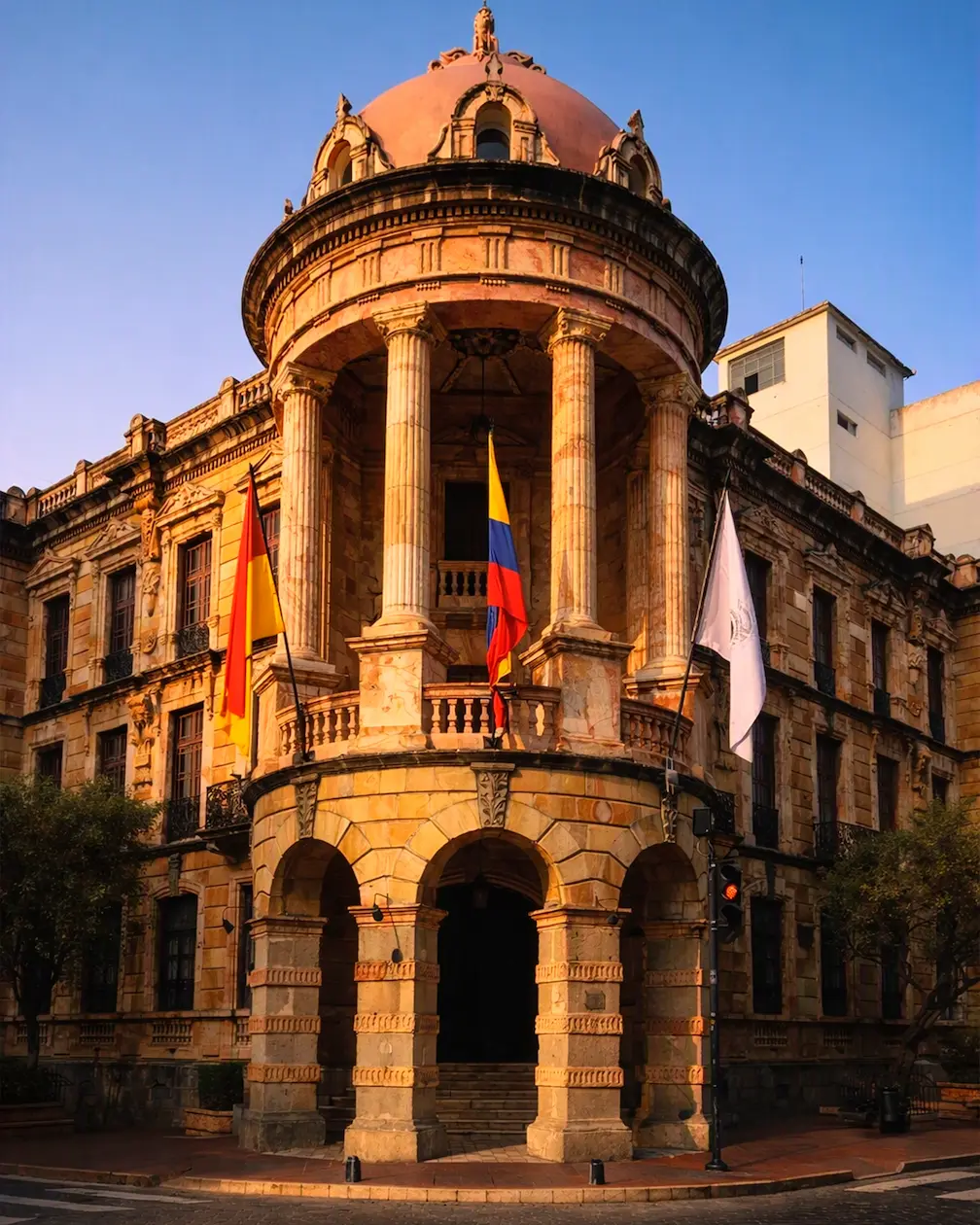
Luis Felipe Donoso Barba, trained in Belgium, built this structure between 1922 and 1926 to house the Banco del Azuay, the region's first bank. It is one of the city's finest examples of French influence.
There is an art gallery on the ground floor. Open Monday through Friday, 8:00 AM to 4:30 PM. Free admission.

The tour ends where it began, at the entrance to Parc Royal. Back at the hotel, enjoying a coffee or the tea ritual is the perfect way to unwind after your walk.